Guide
Sustainable denim manufacturing:
what actually lowers the impact of your jeans
Retailers and customers now ask what makes a pair of jeans “sustainable”. The honest answer depends on a few production choices, not on a label.
This guide covers where the impact sits in denim, the fibre options and their trade-offs, lower-impact finishing, and the proof a claim needs.
It ends with what to write in your tech pack and the wording you can and cannot support.
Where does the environmental impact sit in denim production?
Most of a pair of jeans' impact is decided in four places: the fibre, indigo dyeing, garment washing and finishing. Cutting and sewing matter far less.
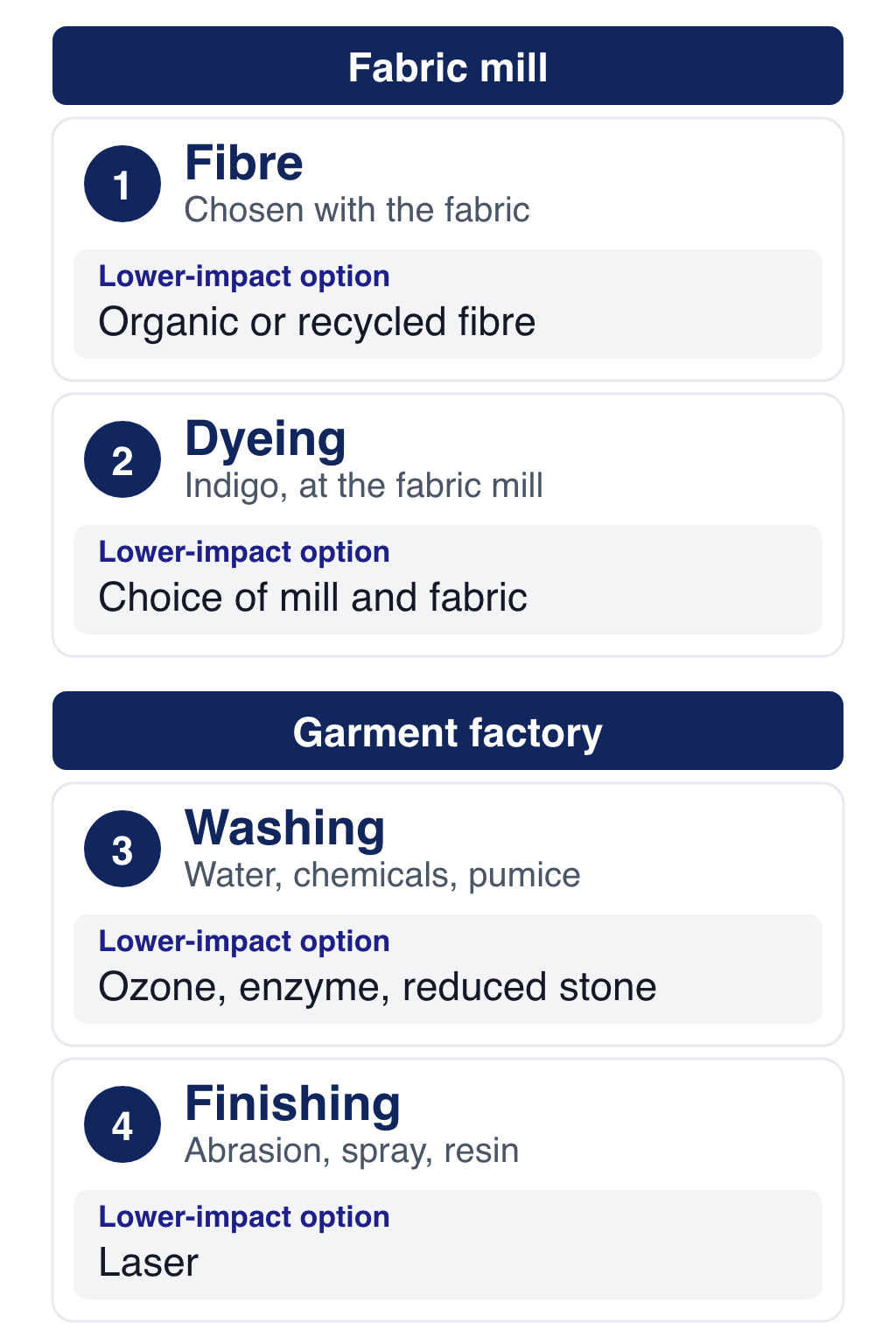
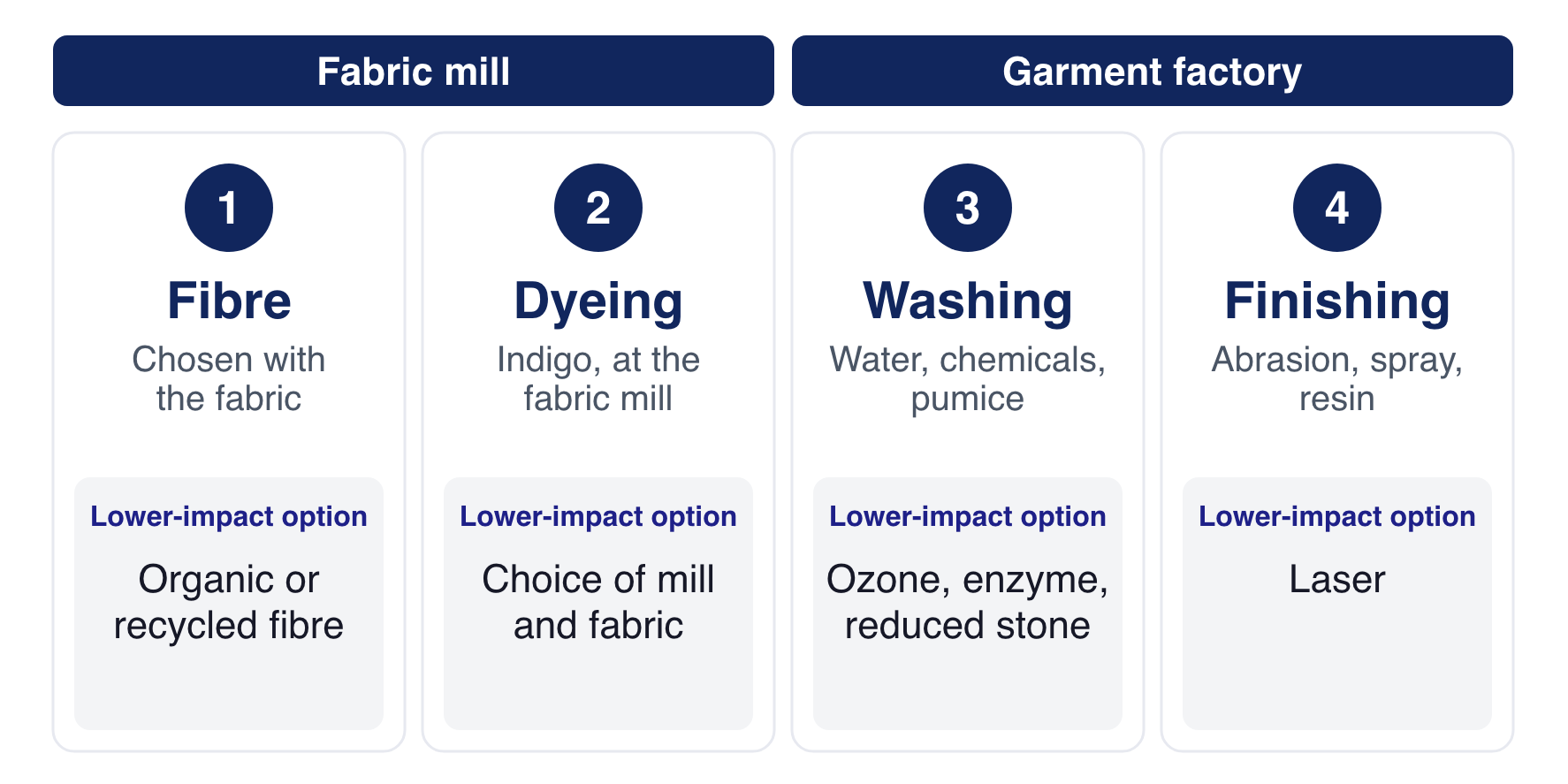
- Fibre: How the cotton, or another fibre, is grown or recycled. You choose it when you pick the fabric.
- Dyeing: Indigo is usually dyed onto the yarn at the fabric mill, using water, chemicals and energy. A brand controls it through the mill and fabric it chooses, not at the garment factory. If you garment-dye or overdye, that happens in the wash house.
- Washing: The wash house is where a garment's water, chemical and pumice use concentrates. Stone washing uses pumice, which wears down into sludge in the wastewater. Bleach and PP spray use oxidising chemicals.
- Finishing: Abrasion, sanding, spray and resin effects add chemicals and labour to each garment. The more distressed the look, the more processing it usually takes.
Sustainability in denim therefore starts with the fabric and the wash brief.
To see where these stages sit in the full process, read how jeans are made.
Organic, recycled or conventional cotton: which fibre for sustainable denim?
The fibre is the first choice and the hardest to change later. Each option changes hand feel, strength, cost and what you can claim. Organic cotton denim and recycled denim both need paperwork to back the name.
Conventional cotton
- What it is: The baseline that every other option is measured against.
- Hand feel and strength: The widest choice of weights, colours and stretch levels.
- Cost: Usually the lowest.
- Claim it supports: None.
Organic cotton
- What it is: Cotton grown without synthetic pesticides and fertilisers.
- Hand feel and strength: Similar to conventional cotton.
- Cost: Usually higher, and there are fewer stock fabrics to choose from.
- Claim it supports: An “organic” claim needs OCS certification along the chain.
Certified or custom fabric can carry mill minimums and longer sourcing. See denim MOQ explained for how minimums work.
Recycled cotton, pre-consumer
- What it is: Fibre made from cutting-room and mill waste.
- Hand feel and strength: Mechanical recycling shortens the fibre, so it is blended with virgin cotton for strength. The hand can feel slightly drier or less even.
- Cost: Usually higher than conventional cotton.
- Claim it supports: A recycled claim needs GRS or RCS.
Recycled cotton, post-consumer
- What it is: Fibre made from used garments.
- Hand feel and strength: It has the clearest recycling story, but colour and fibre length vary more, and the recycled share is usually lower. Sample it before you commit.
- Cost: Usually higher than conventional cotton.
- Claim it supports: A recycled claim needs GRS or RCS.
Lyocell blends
- What it is: A cellulose fibre blended with cotton.
- Hand feel and strength: A softer, more fluid drape and a cooler hand. It suits lighter and fashion fits. It behaves differently in the wash, so approve the wash on that exact fabric.
- Cost: Usually higher.
- Claim it supports: None by itself. Ask the mill which certificates cover the fibre.
Recycled polyester blends
- What it is: Recycled polyester blended into stretch fabric.
- Hand feel and strength: It adds strength and helps recovery. The trade-off is a less “pure cotton” hand. Blended fibres are also harder to recycle again at the end of the garment's life.
- Cost: Usually similar to or a little above conventional stretch fabric.
- Claim it supports: The recycled share needs GRS or RCS.
For weights, stretch and how certified fabric affects sampling, see denim fabric weights explained.
Lower-impact denim finishing: laser, ozone, enzyme and eco-stone
These techniques replace some higher-impact steps. Each one has limits on the looks it can produce. For how each wash works, see [custom denim washes](/guides/custom-denim-washes/).
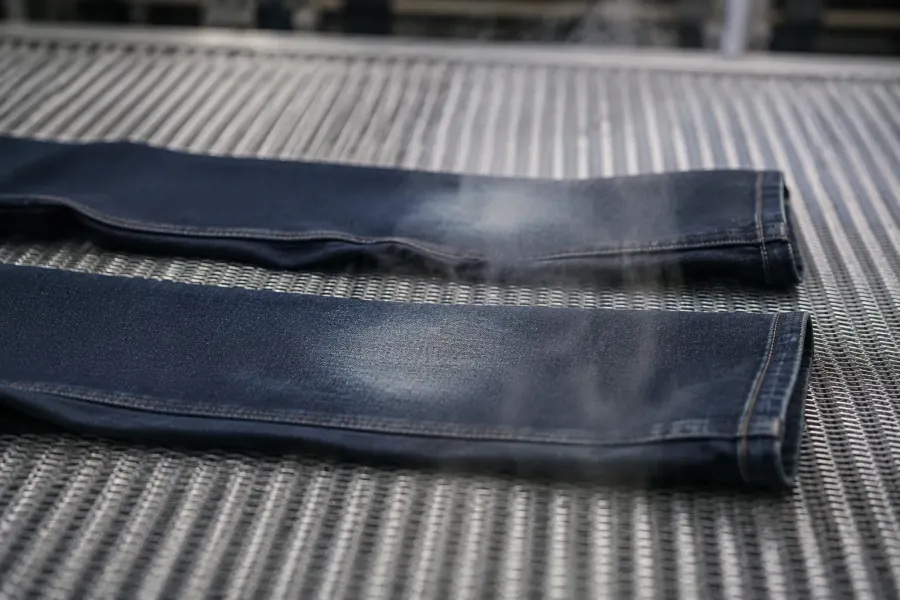
Laser finishing
Laser applies the fade by program instead of by hand or spray. That removes some manual and chemical steps from the finishing line and repeats from pair to pair.
- Replaces: some hand sanding, PP spray and abrasion
- Can replicate: whiskers, fades and patterns, repeatably
- Cannot fully replicate: the heavy, irregular all-over softness of a long stone wash. It does not soften the fabric on its own


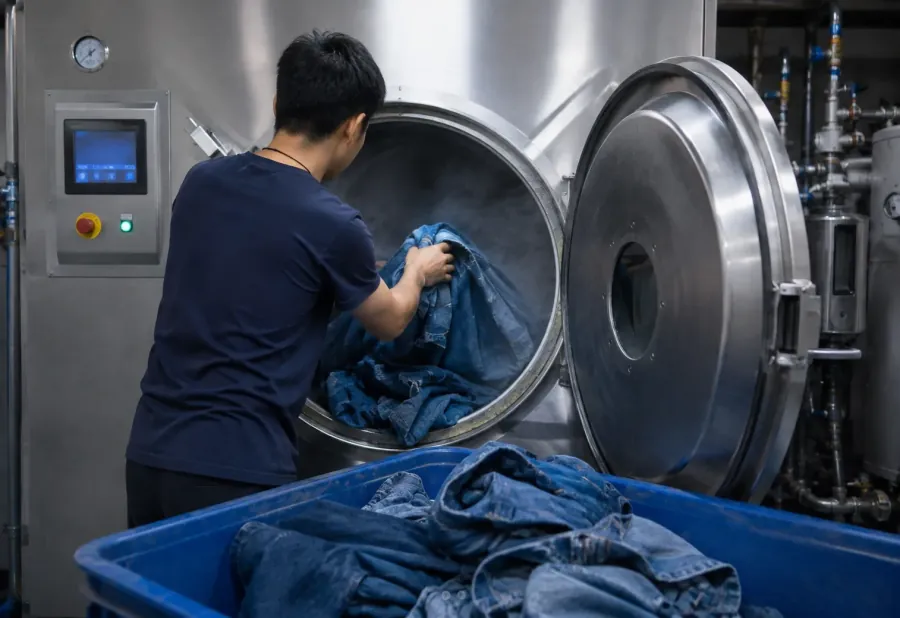
Ozone finishing
Ozone reduces indigo for a controlled fade. It can help reduce water and chemical use compared with some conventional wet-processing methods.
- Replaces: some conventional wet fading steps
- Can replicate: controlled, even fading
- Cannot fully replicate: high-contrast localised highlights on its own. Pair it with laser for those
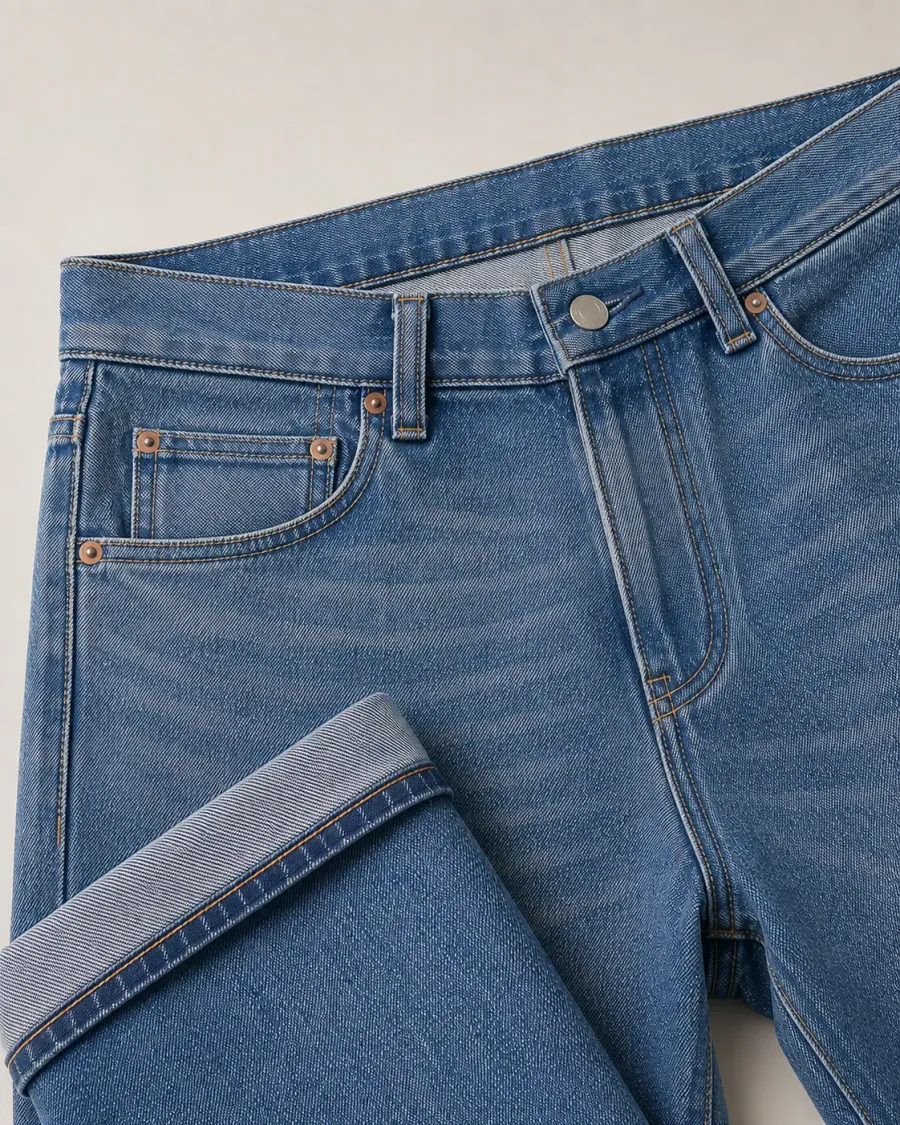
Enzyme wash
Cellulase enzymes soften the fabric and release surface indigo.
- Replaces: some or all of the pumice in a stone-wash look
- Can replicate: a smoother, cleaner fade
- Cannot fully replicate: the rugged, uneven abrasion of heavy stone washing
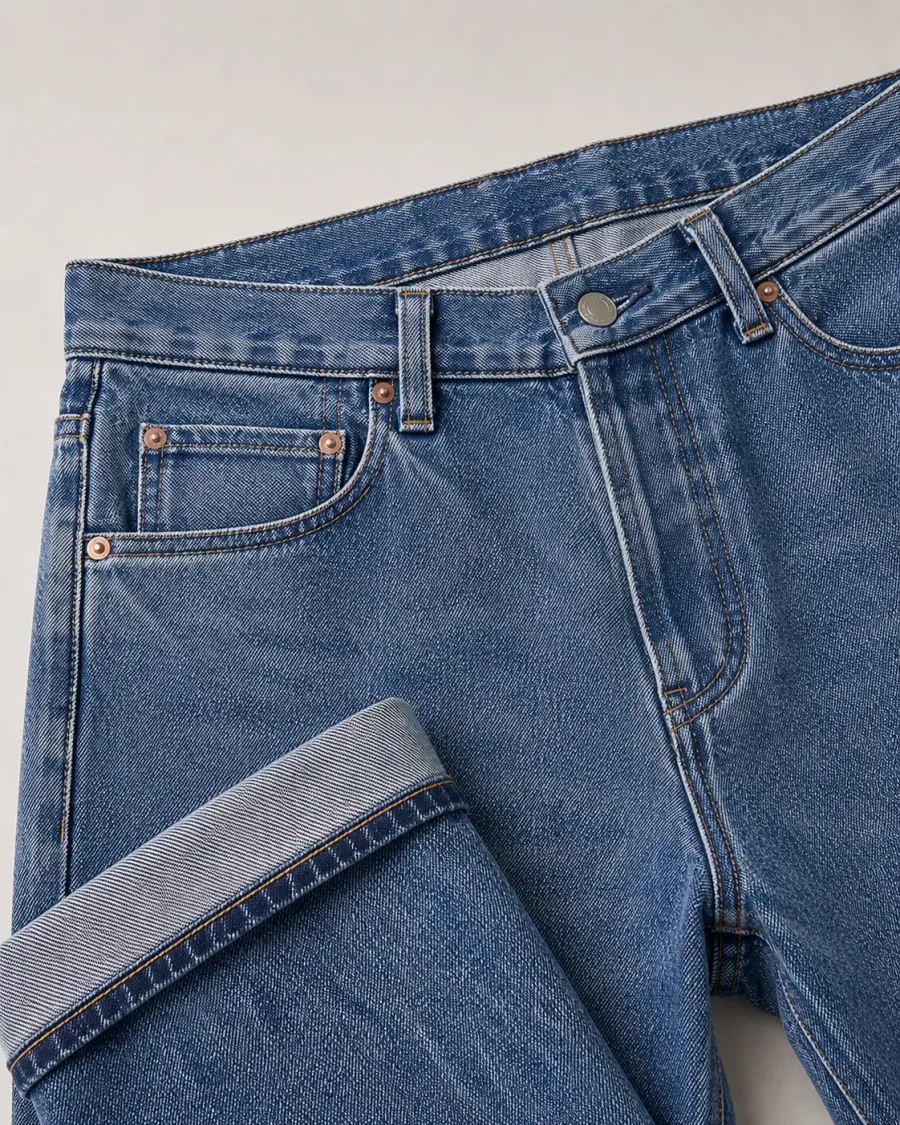
Eco-stone (reduced or stone-free abrasion)
Eco-stone means synthetic or reusable abrasives used instead of pumice. That reduces stone sludge in the wastewater. Wash houses differ in what they run, so confirm availability at enquiry.
- Replaces: pumice stones
- Can replicate: close to a stone-wash softness and fade
- Limit: results vary by fabric, so match the target on a wash sample
What sustainable choices change in look, cost and MOQ
A lower-impact spec is a trade-off, not a free upgrade. Plan for it before sampling.
Look and hand feel
Recycled and blended fabrics can feel and fade differently from virgin cotton. Fewer process steps usually mean a cleaner, less distressed look. Approve every change on a washed sample, not on a swatch.
Cost direction
Certified fibre usually costs more per metre. Laser and ozone can cut some manual steps, so the net effect depends on the wash. Ask for a quote on your exact fabric and wash, because prices for a different spec do not carry over.
MOQ and fabric availability
Certified or custom fabric may have mill minimums, and there are fewer stock options. Check this before you design around a fabric. Denim MOQ explained shows how minimums are counted.
Lead time and sampling
Certified fabric must be sourced before the first sample. Each new fabric or wash recipe adds a sampling round. See denim sampling explained for how that stage works.
Paperwork
Claims add certificates and per-shipment documents. Budget the admin time on your side and the factory's.
Recycled and organic claims: what GRS, RCS and OCS prove
GRS and RCS cover recycled content. They track it through each certified stage, which is called chain of custody. GRS also adds social, environmental and chemical requirements at certified sites. RCS covers the recycled content only. OCS does the same as RCS for organic fibre.
A claim needs an unbroken chain. The fibre or fabric supplier, the fabric mill and the garment factory must all be certified. You then need a transaction certificate for each shipment you label. One certified site in the middle is not enough.
ISO 14001 and amfori BSCI describe the factory, not the product. They do not back up a product claim such as “recycled” or “sustainable”.
For what each certificate covers and how to check one, read denim factory certifications explained.
Avoiding greenwashing: wording you can support and wording you cannot
A claim has to be specific, true for that product and backed by a document you hold. Vague words such as “eco friendly denim” are where brands get challenged.

Claims you can support
Specific, measurable and backed by a certificate or record for this order.
examples
- “Made with 30% recycled cotton (GRS certified)”. The 30% is only an example. Your figure must match the transaction certificate
- “Organic cotton, certified to OCS”
- “Faded with laser and ozone instead of hand sanding”, only if that is what the order used
- “Made in an ISO 14001-certified factory”. This is a factory claim, not a product claim
what you need
- A transaction certificate for each shipment
- Fabric composition on the spec and care label
- The approved wash recipe on file

Claims to avoid
Broad, absolute or unmeasured, with no document behind them.
examples
- “Eco-friendly jeans” or “sustainable denim” with no qualifier
- “Uses X% less water” without measured data for that product
- “Recycled” or “organic” without a certified chain of custody
- “Zero impact”, “carbon neutral” or “chemical-free”
why it fails
- It cannot be checked
- It overstates the share of the product that changed
- It implies a factory certificate covers the product
Can we call the whole collection sustainable?
No. Name the specific attribute for each style, such as “made with organic cotton, certified to OCS”. Use it only for the styles that have it.
What to specify in your tech pack for sustainable denim
Put sustainability requirements in at step 1 of the process below, tech-pack review, before sampling starts.
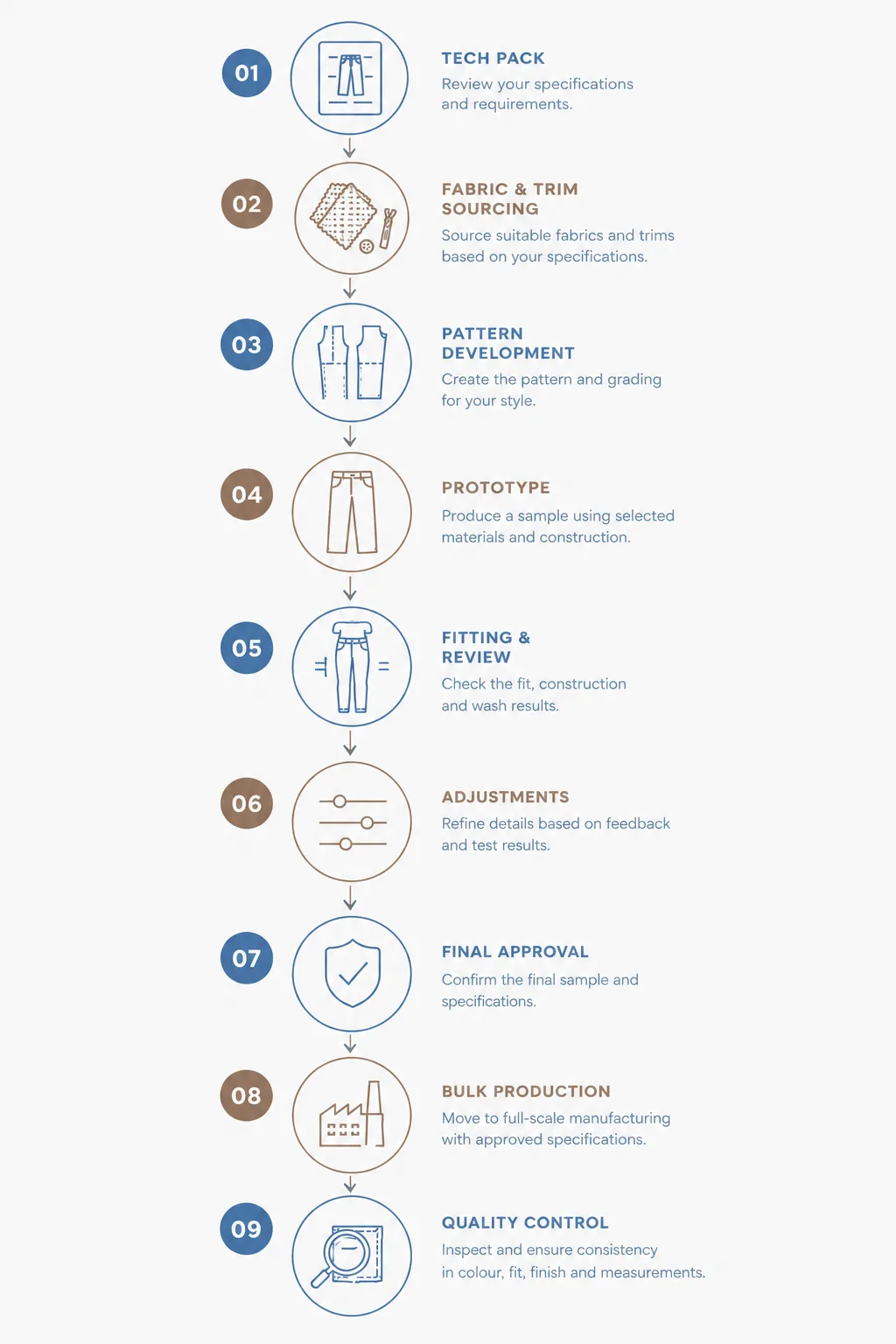
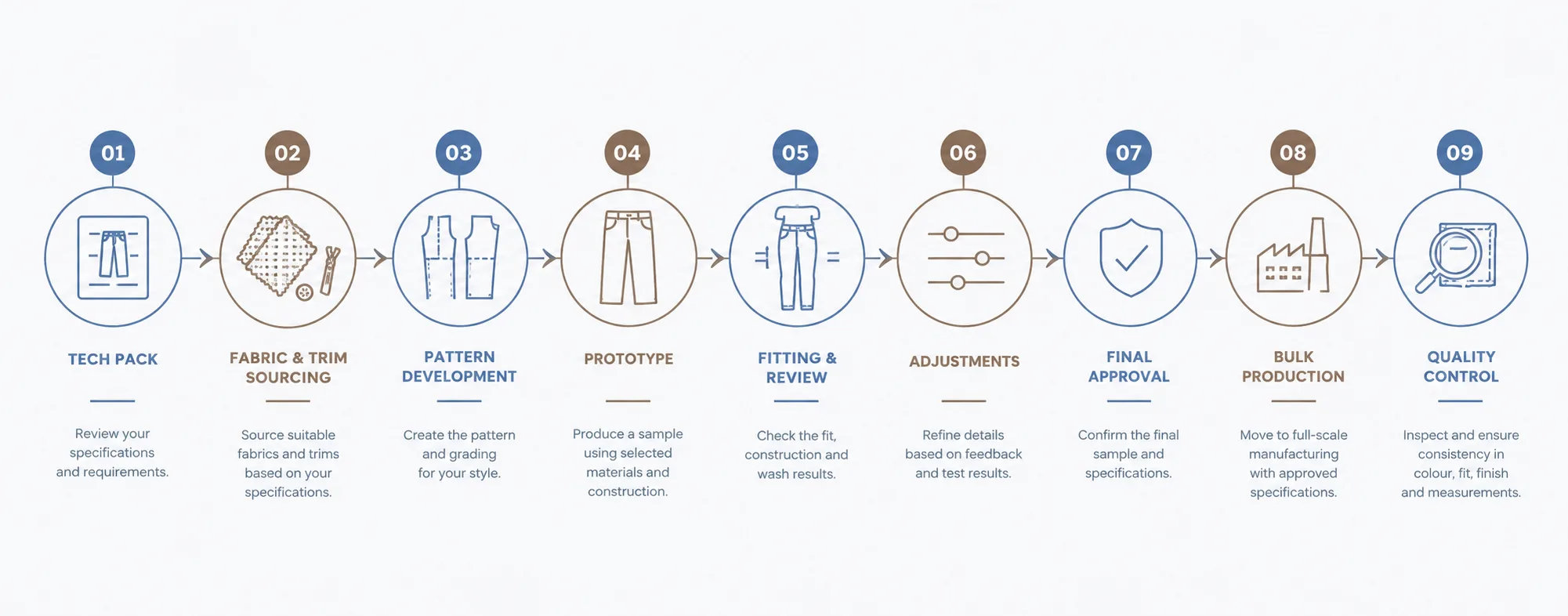
Copy this list into your tech pack or enquiry:
- Fibre and composition, including the recycled or organic percentage you want
- Certified content: yes or no, and which standard (GRS, RCS or OCS)
- Target wash, and which lower-impact methods you prefer (laser, ozone, enzyme or reduced stone)
- Effects you will accept from laser instead of hand sanding or PP spray
- Restricted chemicals, or your retailer's restricted substances list (RSL) if it has one
- The exact claim wording you plan to use, so the factory can confirm the paperwork
- A reference garment or approved wash standard
For the fabric and wash parts of the spec, see what goes in a denim tech pack. For wash wording, see custom denim washes.
Sustainable denim manufacturing at Top Mondial
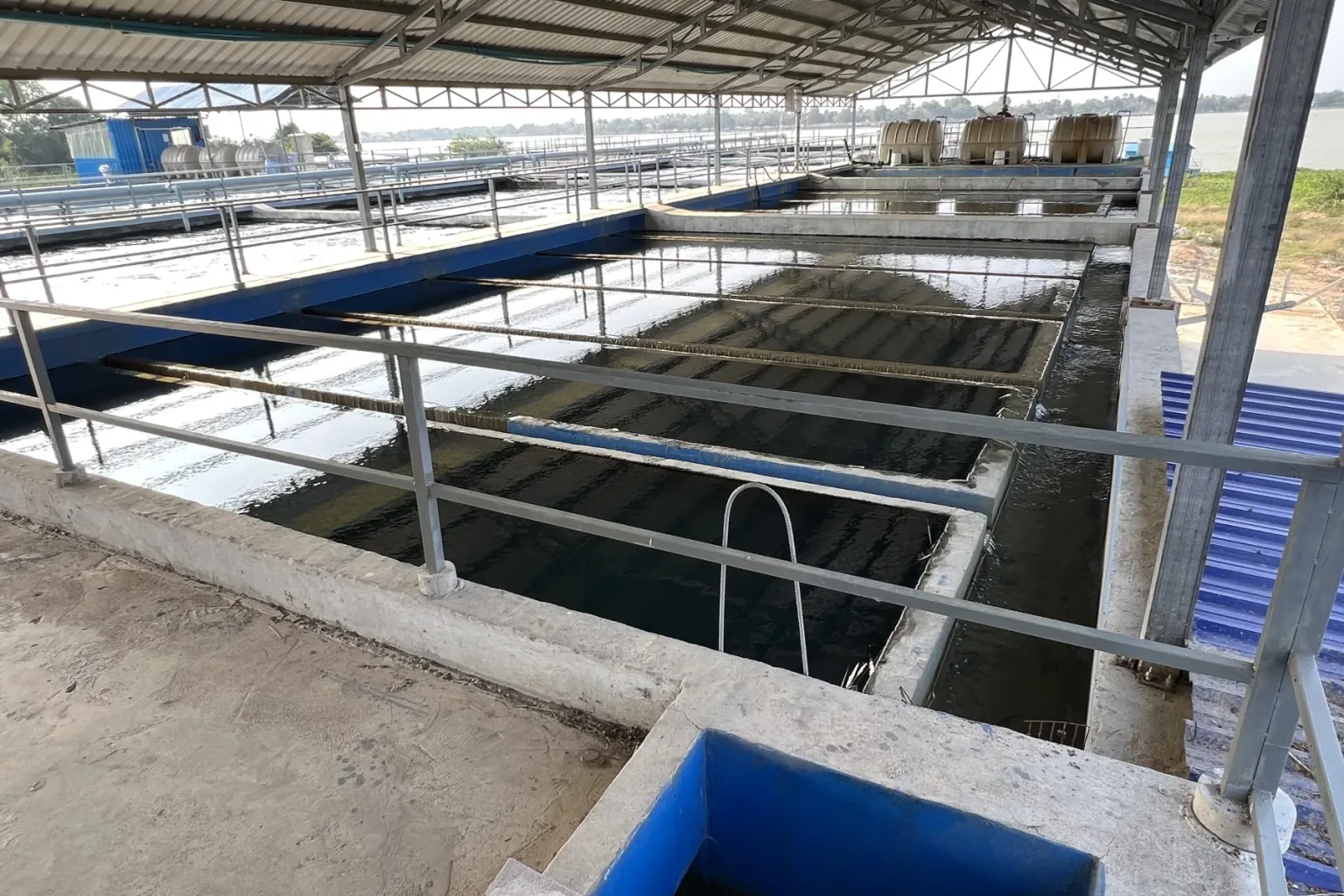
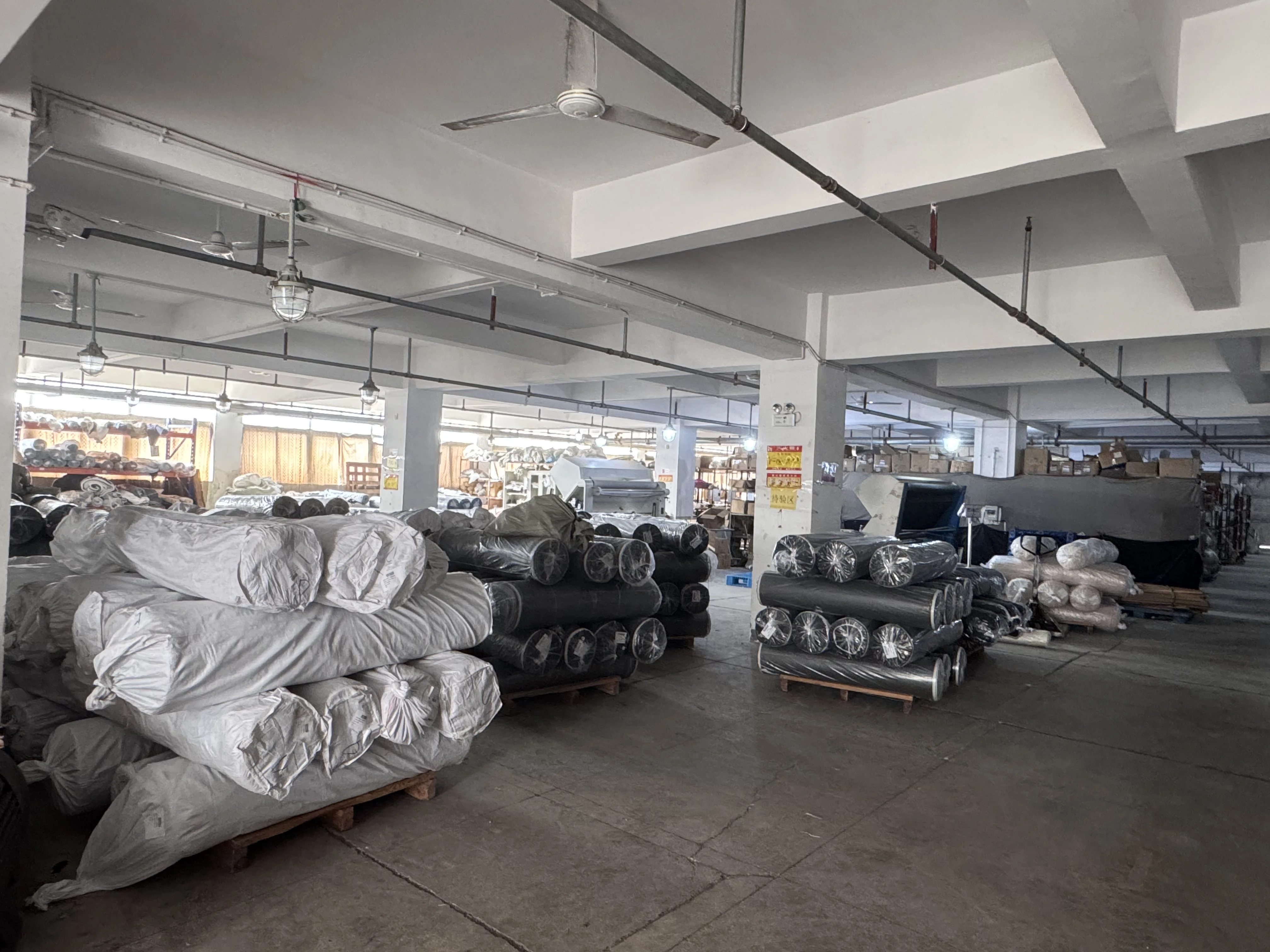
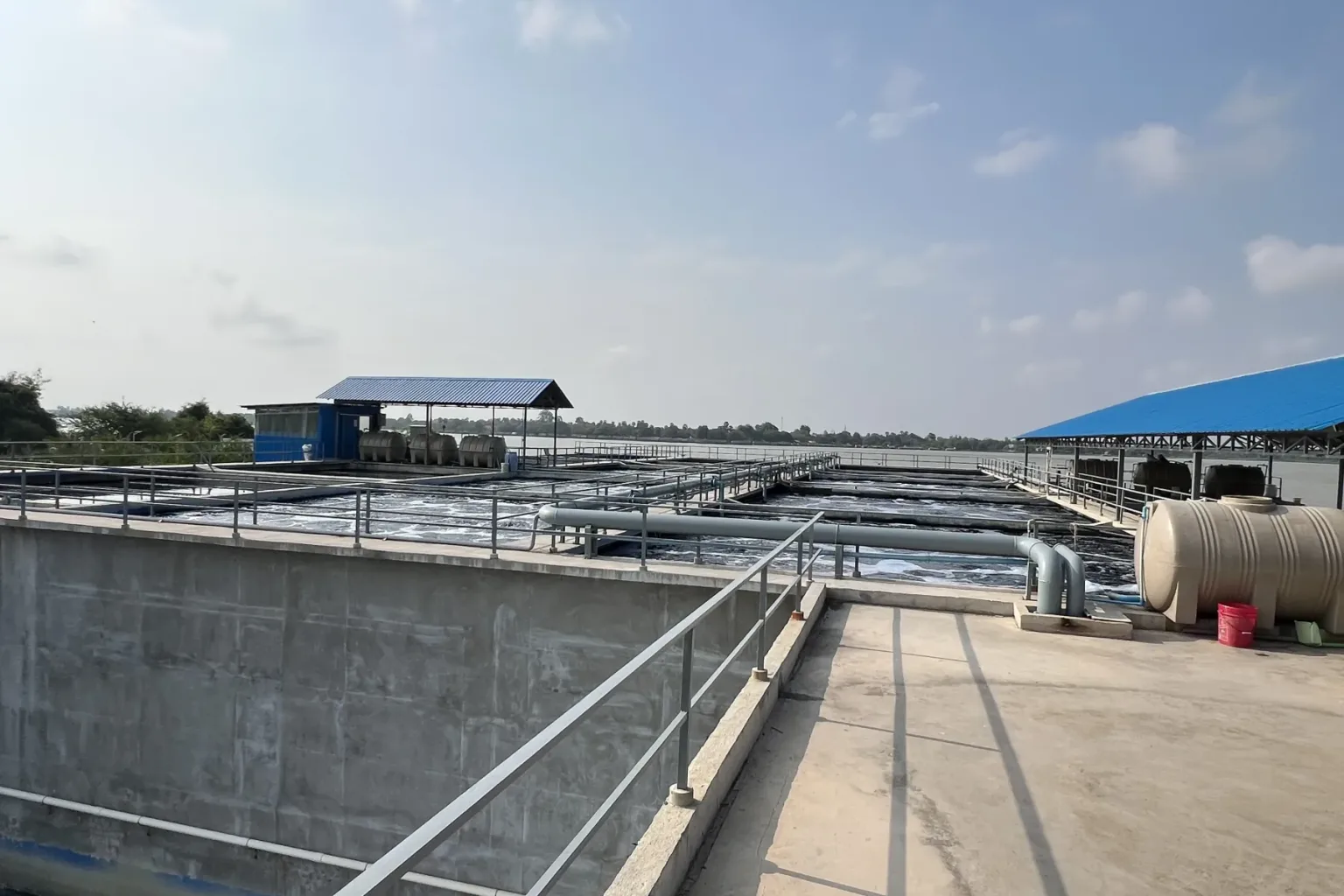
We make denim in our own factories: one in Zhejiang, China, and two in Cambodia. Our operations include laser machines, ozone treatment systems and eco-friendly water treatment facilities.
Our dyeing and washing department develops washes in-house, including ozone and other advanced washing technologies. Our fabric sourcing department has long-term partnerships with more than 20 fabric mills, with access to certified and sustainable material options.
Top Mondial holds these certifications:
- ISO 9001:2015
- ISO 14001:2015
- amfori BSCI
- Global Recycled Standard
- Recycled Claim Standard 100
- Recycled Claim Standard Blended
- Organic Content Standard 100
- Organic Content Standard Blended
- ICS
You can see the badges on the factories page. Ask us for certificate copies and scope for your project.
Send your product, quantity, the fibre or certified content you need, your target wash, and the claim you want to make.